


A football game, a title race, or a player prop can be priced on a sportsbook and on Kalshi at the same time, and the two numbers rarely match exactly. Comparing kalshi vs sportsbook odds means translating two different pricing languages into the same unit — implied probability — so you can see what each venue is actually saying about the outcome.
Table of Contents
Two Ways to Price the Same Outcome
A sportsbook quotes American odds: a number like -150 or +130 tied to a fixed payout structure. Kalshi quotes a contract price in cents, from 1 to 99, representing the cost of a “yes” share that pays out $1 if the event happens.
Both are just probability estimates wrapped in different packaging. A sportsbook line and a Kalshi contract price are both answers to the same question — “how likely is this?” — expressed through different math.
Converting Kalshi Cents to Implied Probability
Kalshi’s conversion is the simplest of the two. A contract priced at 60 cents implies roughly a 60% chance of the “yes” outcome. The price is the probability, before fees.
- 25 cents ≈ 25% implied probability
- 60 cents ≈ 60% implied probability
- 80 cents ≈ 80% implied probability
That directness is one reason people find prediction markets easy to read at a glance — no formula needed, just the price itself.
Converting American Odds to Implied Probability
Sportsbook odds take an extra step. For negative odds (favorites), the formula is:
`Implied probability = (-odds) / (-odds + 100)`
Say a favorite is priced at -150: that’s 150 / 250 = 60% implied probability.
For positive odds (underdogs):
`Implied probability = 100 / (odds + 100)`
Say an underdog is priced at +130: that’s 100 / 230 ≈ 43.5% implied probability.
Once both sides are converted to percentages, a Kalshi contract at 60 cents and a sportsbook line of -150 are directly comparable — both are expressing a 60% view, at least before costs are factored in.
Why the Two Venues Can Disagree
Even pricing the identical event, Kalshi and a sportsbook can land on different numbers. A few reasons this happens:
- Different order flow. A sportsbook’s line reflects its own customer betting patterns; Kalshi’s price reflects whoever is trading contracts on its exchange. Different crowds, different information, different money.
- Different update speed. One venue may react to a lineup change or weather report before the other catches up, creating a short-lived gap.
- Different liquidity depth. A market with thin trading volume can drift further from a “true” probability than one with heavy volume, simply because fewer participants are correcting the price.
- Structural differences. A sportsbook is pricing a bet it holds the other side of; Kalshi is a marketplace matching buyers and sellers of contracts. Their incentives for where to set the number aren’t identical.
None of this means one venue is “right” and the other “wrong.” It means each price is a snapshot of a distinct pool of participants and information at a given moment.
Fees, Spreads, and the Vig
Neither venue hands you a pure, cost-free probability. Sportsbooks build in the vig (or juice) — the reason a coin-flip game often shows both sides at -110 instead of even money, so the implied probabilities on each side add up to more than 100%.
Kalshi’s cost shows up differently: as the bid-ask spread between what buyers are willing to pay and what sellers are willing to accept, plus any trading fees. A contract might show a 58-cent bid and a 62-cent ask — the market’s way of saying “roughly 60%, give or take the cost of trading.”
To fairly compare the two, it helps to look past the raw quoted number toward the effective cost of taking a position — the vig-adjusted price on one side, the spread-adjusted price on the other.
What a Persistent Gap Actually Means
A one-time difference between Kalshi and a sportsbook price isn’t unusual — it can simply reflect timing or which crowd has weighed in most recently. A gap that persists and stays wide over time is more informative.
It can mean:
- One venue’s participants have priced in something the other hasn’t yet — information, injury news, or a shift in sentiment.
- The two pools of bettors or traders genuinely disagree about the outcome, not just about timing.
- Liquidity differences are letting one price drift further from consensus than the other.
A persistent gap isn’t an instruction to act — it’s a signal worth understanding before deciding anything. Reading it well means checking whether the gap reflects new information, a liquidity quirk, or just normal noise between two separately priced markets.
Seeing sportsbook odds and Kalshi contract prices side by side, already converted to the same probability scale, makes these comparisons easier to make at a glance — which is the kind of view a dashboard like BetSlate is built to provide.
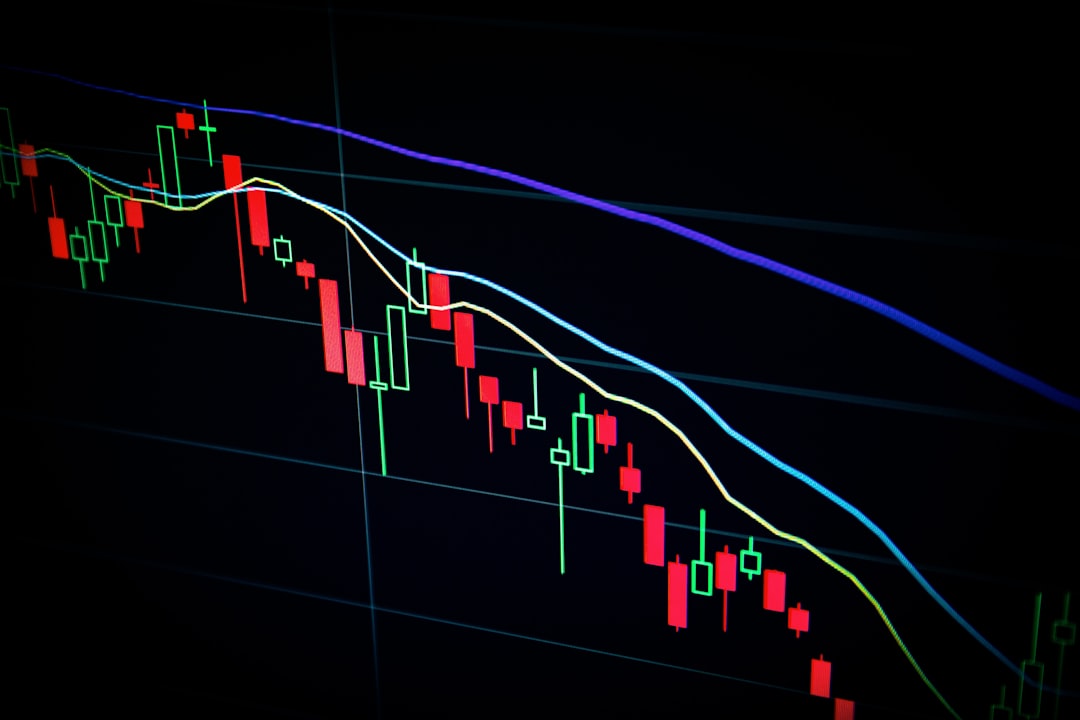
Featured image — Photo: forextime.com / CC BY 2.0, via Wikimedia Commons
Frequently Asked Questions
Is Kalshi the same thing as a sportsbook?
No. Kalshi is a regulated exchange where users trade contracts on event outcomes, while a sportsbook takes the other side of a wager directly. The pricing mechanics and cost structures differ even when they’re covering the same event.
Why don’t Kalshi prices and sportsbook odds always match?
They’re set by different pools of participants reacting to information at different speeds, with different liquidity and cost structures. A gap reflects those differences, not necessarily an error in either price.
How do I convert American odds to a percentage?
For negative odds, divide the absolute value by itself plus 100 (e.g., -150 becomes 150/250 = 60%). For positive odds, divide 100 by the odds plus 100 (e.g., +130 becomes 100/230 ≈ 43.5%).
Does a Kalshi contract price already include fees?
The quoted price reflects the current bid-ask spread, and trading fees are typically layered on separately. Checking the effective cost of entering a position gives a more accurate picture than the raw quote alone.
What should I do if I see a big gap between the two prices?
Treat it as a prompt to look closer, not a signal to act. Check whether the gap reflects a recent news update, thin liquidity, or a genuine difference of opinion between the two pools of participants before drawing conclusions.