

If you’ve spent any time comparing NFL point spreads, you’ve probably noticed that lines cluster tightly around certain numbers and barely move past others. That’s not random. Understanding nfl key numbers — the final-margin values that show up over and over in football scores — helps explain why a half-point of movement can matter enormously in one spot and almost nothing in another.
Table of Contents
Why Football Scores Land on Certain Numbers
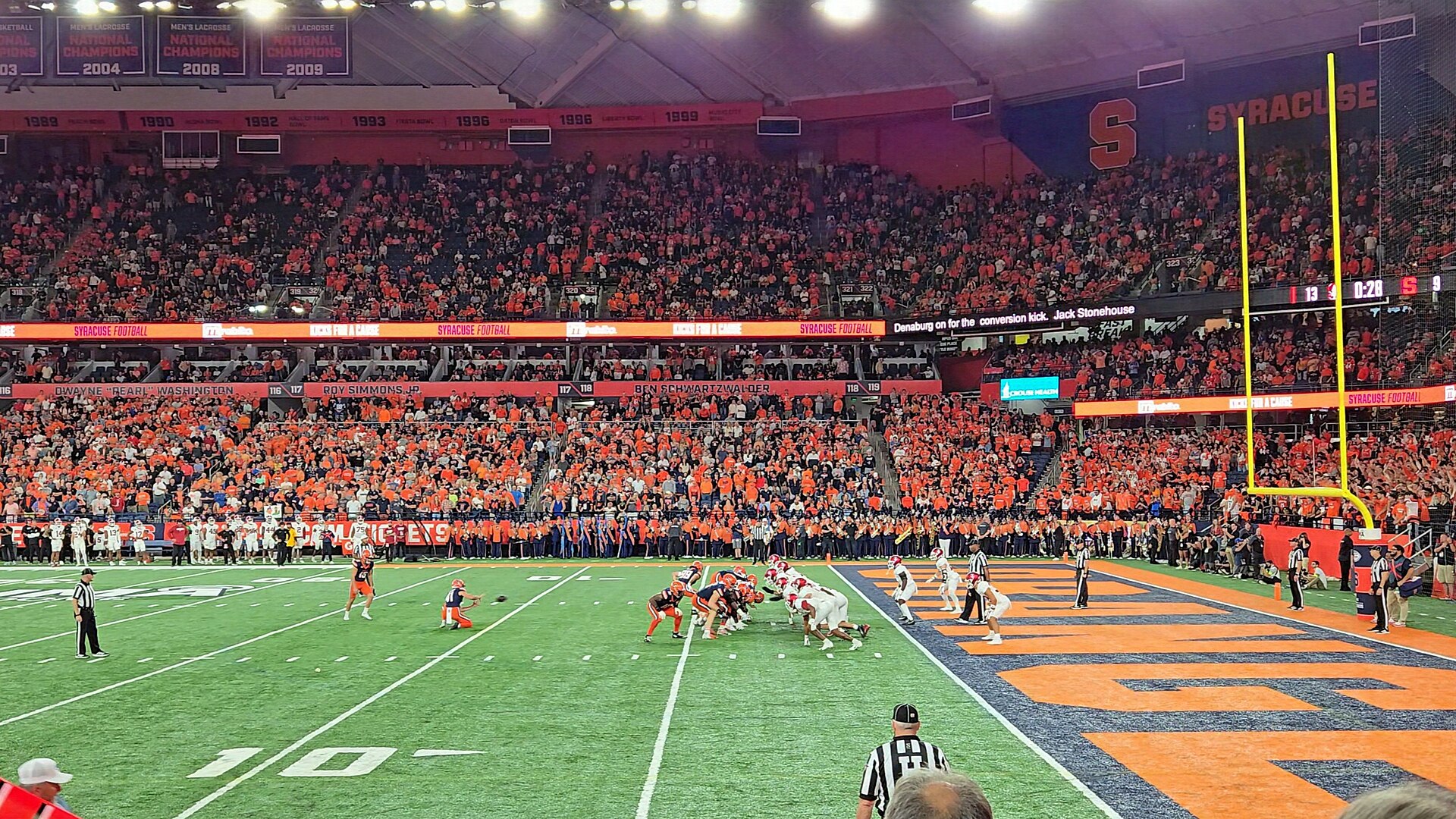
Football scoring is built around touchdowns (7 points with the extra point) and field goals (3 points). Because of that, final margins aren’t evenly distributed across every possible number. A game that comes down to one made field goal ends with a 3-point margin. A game decided by a single touchdown, extra point included, ends with a 7-point margin.
Over decades of NFL games, margins of 3 and 7 have occurred far more often than 2, 4, 5, or 9. That clustering is the entire reason “key numbers” exist as a concept in the first place.
The Numbers That Matter Most
Not every number carries the same weight. Based on how often final margins land on them, the rough hierarchy looks like this:
- 3 — by far the most common margin, tied to a single field goal or a field-goal-versus-touchdown swing
- 7 — the second most common, tied to a one-score touchdown game
- 6 — tied to two field goals, or a touchdown against a touchdown-minus-extra-point
- 10 — a touchdown plus a field goal
- 14 — two touchdowns
After that, the frequency drops off noticeably. Numbers like 4, 8, 11, and 13 show up far less often as final margins, which is part of why lines can sit at, say, 6.5 for long stretches without much line movement.
Why the Same Half-Point Isn’t Worth the Same Everywhere
This is the part that trips up a lot of bettors: a half-point isn’t a fixed unit of value. Its worth depends entirely on where it sits.
Moving a spread from -2.5 to -3.5 crosses the single most common NFL margin. That half-point now separates a win from a push-turned-loss (or vice versa) in a meaningful slice of games. Moving a line from -8.5 to -9.5, by contrast, crosses a number that rarely shows up as a final margin at all — the practical difference is much smaller.
The same logic applies around 7. Going from -6.5 to -7.5, or from -7.5 to -6.5, crosses a heavily used margin. Going from -11.5 to -12.5 does not carry nearly the same weight, even though it’s still just one point.

This is the core idea behind reading key numbers: it’s not about the size of the move, it’s about whether the move crosses a number where games actually tend to land.
Buying Points: What You’re Actually Paying For
Sportsbooks let bettors “buy” half-points, usually by paying extra juice — for example, moving from -3 to -2.5 might cost more than the standard -110 price. Whether that’s worth it depends on which number you’re buying across.
Buying off of 3 — moving a favorite from -3.5 down to -2.5, or an underdog from +2.5 up to +3.5 — is the classic example, because it takes a bet off the most common margin in football and onto safer ground. Buying off of 7 works the same way, just to a smaller degree since 7 shows up less often than 3.
Buying a half-point that doesn’t touch 3 or 7 — say from -8.5 to -7.5 — moves the line onto 7, so that one can matter too. But buying from -9.5 to -8.5 crosses very little meaningful territory. The extra cost is the same across the board; the value returned is not. Say a book prices standard buy-a-point moves at -120 instead of -110 — that markup is worth paying far more often near 3 and 7 than elsewhere.
Teasers and the Key-Number Trap
Teasers let bettors move multiple lines by a set number of points (commonly 6) in exchange for needing every leg to hit. Because they involve bigger point moves, teasers can cross two key numbers on a single game — for example, taking a -8.5 favorite and teasing it down to -2.5 crosses both 7 and 3.
That’s precisely why teasers built around crossing 3 and 7 together are the most discussed version of this strategy. It’s also why teasers that don’t cross a key number — say, moving a -1.5 dog to +4.5 — offer much less practical benefit despite using the same number of teaser points. The payout structure on a teaser is fixed regardless of which points get crossed, so the reader’s job is figuring out whether a given teaser leg is actually buying meaningful real estate or just moving a number that was never going to matter much anyway.
Reading Key Numbers as Information, Not a System
None of this tells you who to bet on. Key numbers are a lens for reading how spreads are built and why certain half-point moves get priced higher than others — not a formula that predicts outcomes. A -3 line and a -3.5 line can both be perfectly reasonable prices; the point is understanding what that half-point represents before deciding whether it’s worth paying for.
Sites like BetSlate exist to pull spreads, totals, and line movement into one dashboard so this kind of comparison is easier to make at a glance, but the actual read — whether a given number is worth buying, teasing, or just taking as-is — is still up to the person placing the bet.
Featured image — Photo: Kiran891 / CC BY-SA 4.0, via Wikimedia Commons
Frequently Asked Questions
Why are 3 and 7 the most important NFL key numbers?
They correspond to the two most common ways football games are decided — a single field goal (3 points) and a single touchdown with the extra point (7 points). Final margins land on these numbers more often than on almost any other value.
Are there other key numbers besides 3 and 7?
Yes. Numbers like 6, 10, and 14 also show up as final margins more frequently than average, since they represent common combinations of field goals and touchdowns, though none are as significant as 3 and 7.
Is it always worth buying a half-point off of 3?
It depends on the price charged for the move. Buying off the most common margin in football is generally more meaningful than buying elsewhere, but the extra cost still has to be weighed against how much value that specific crossing adds.
Do key numbers apply to totals as well as spreads?
Key numbers are primarily a point-spread concept tied to how games are scored and decided. Totals can have their own common landing numbers, but the reasoning is different and less tied to single-score increments.
Does understanding key numbers guarantee better betting outcomes?
No. It’s a way to understand how spreads are priced and where half-points carry more or less practical weight — useful context for reading a line, not a predictive system.